

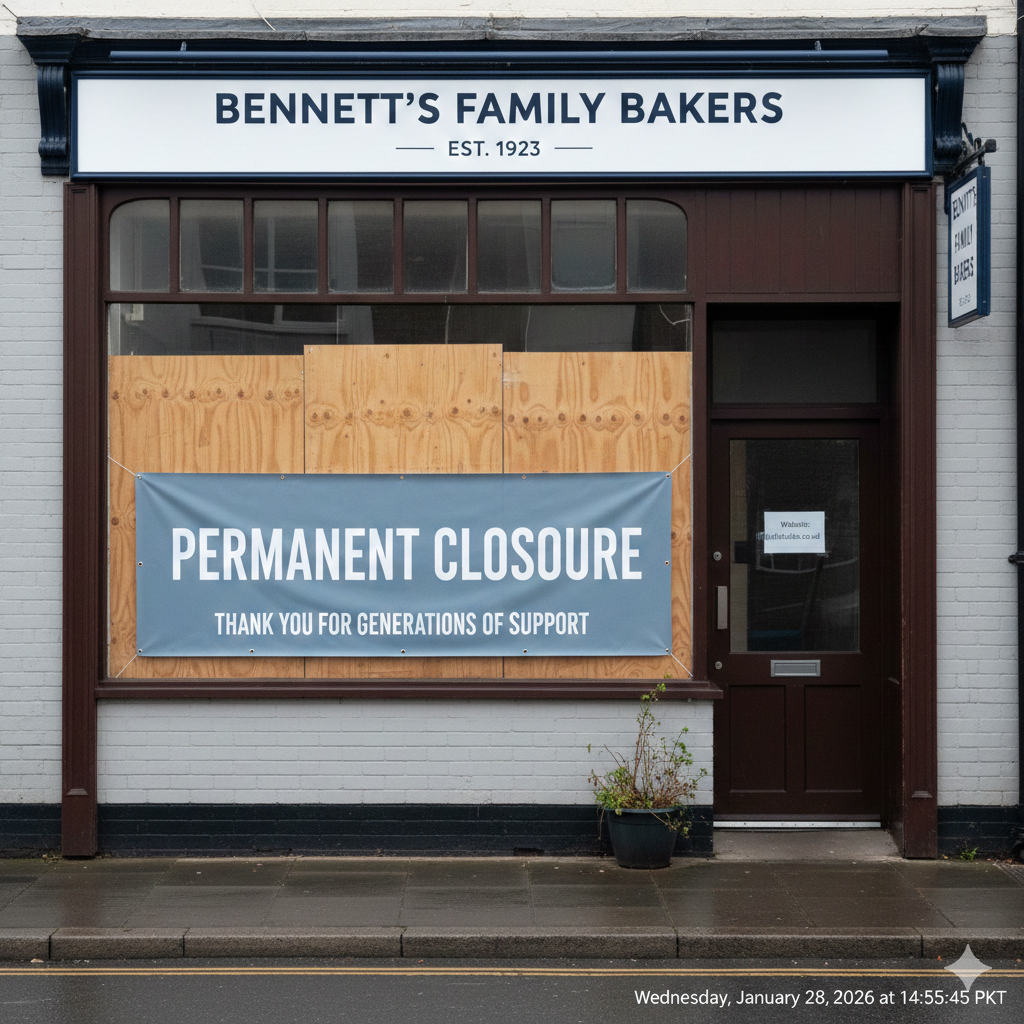
Bennetts Family Bakers Closure: The Definitive Industry Analysis
The news of the bennetts family bakers closure sent a quiet shockwave through local communities, suppliers, and the wider UK baking sector. For decades, the company represented more than bread on shelves; it stood for continuity, family ownership, and a regional food economy that many assumed would always endure.
This article unpacks what really happened, why it matters far beyond a single brand, and what the closure reveals about structural changes reshaping traditional food manufacturing. It is written to serve as a complete, authoritative resource for readers seeking clarity, context, and forward-looking insight.
Understanding the Legacy of a Family Bakery Brand
Bennetts Family Bakers built its reputation on consistency, long-term supplier relationships, and a multi-generation management structure that emphasized stability over aggressive expansion. That legacy created deep trust with retailers and consumers who valued dependable quality over novelty.
The strength of that legacy also shaped expectations, which is why the bennetts family bakers closure felt abrupt to many observers. Brands rooted in family stewardship often project permanence, even when underlying economic pressures are quietly mounting.
How the UK Baking Industry Quietly Changed
Over the last fifteen years, industrial baking in the UK has undergone consolidation, automation, and margin compression driven by supermarket pricing power. Large-scale producers optimized for volume, while smaller and mid-sized operators faced rising costs with limited negotiating leverage.
Within this context, the bennetts family bakers closure was less an isolated event and more a visible marker of systemic change. Traditional models built for predictability struggled in a market that now rewards speed, scale, and capital intensity.
Cost Pressures That Redefined Sustainability
Energy prices, ingredient volatility, and wage inflation steadily eroded operating margins across the baking sector. Even well-managed family firms found that incremental efficiency gains could no longer offset structural cost increases.
For Bennetts, these pressures compounded over time, making the bennetts family bakers closure a decision rooted in financial reality rather than short-term mismanagement. The economics simply stopped aligning with the company’s long-term viability goals.
Retail Dynamics and the Power Imbalance
Supermarkets increasingly dictate pricing, product specifications, and delivery schedules, leaving suppliers little room to adjust. For family-run bakeries, absorbing these demands often means sacrificing margin or operational flexibility.
The bennetts family bakers closure highlights how even respected suppliers can become vulnerable when retail relationships shift from partnership to transactional leverage. It is a cautionary signal to other mid-sized food producers navigating similar dynamics.
Operational Scale Versus Cultural Identity
Scaling operations can protect margins, but it often challenges the cultural identity of family businesses. Bennetts maintained a production model aligned with heritage values rather than rapid industrial expansion.
That choice preserved brand integrity but limited adaptability, a tension that ultimately influenced the bennetts family bakers closure. The case illustrates how values-based decisions can carry long-term strategic trade-offs.
Workforce Impact and Local Employment
The closure affected employees who had built careers around stable, long-term employment. In regional economies, such employers often serve as anchors, supporting secondary jobs and local services.
Beyond economics, the bennetts family bakers closure disrupted social continuity. Generational workplaces foster loyalty and identity, making their loss felt far beyond balance sheets.
Supplier Relationships and Ripple Effects
Bennetts sourced ingredients and services from a network of regional suppliers who relied on predictable demand. When a central buyer exits, those suppliers must quickly adapt or absorb losses.
The bennetts family bakers closure therefore triggered secondary challenges, reminding stakeholders that business exits rarely occur in isolation within interconnected supply chains.
Consumer Perception and Brand Trust
Consumers often underestimate how fragile familiar brands can be in competitive markets. Trust built over decades does not always translate into pricing power or resilience.
In the wake of the bennetts family bakers closure, many consumers expressed surprise, underscoring a gap between brand perception and operational reality. That gap is common in heritage food brands.
Financial Signals That Precede Closures
Closures are rarely sudden from an internal perspective. Declining margins, delayed capital investment, and cautious forecasting often precede public announcements by years.
Analyzing the bennetts family bakers closure through this lens reveals patterns that financial analysts recognize across traditional manufacturing sectors under stress.
Leadership Decisions and Timing
Family-owned firms often face emotional complexity when considering closure. Leadership must balance responsibility to employees, reputation, and family legacy.
The timing of the bennetts family bakers closure suggests a deliberate choice to exit before deeper financial distress emerged, preserving dignity and limiting broader fallout.
Regulatory and Compliance Burdens
Food safety regulations, while essential, require continuous investment in systems and audits. For mid-sized bakeries, compliance costs can grow disproportionately.
These regulatory dynamics formed part of the backdrop to the bennetts family bakers closure, adding to cumulative operational strain rather than acting as a single tipping point.
Market Trends Toward Centralized Production
The industry increasingly favors centralized mega-bakeries serving national distribution networks. This model reduces per-unit costs but marginalizes regional producers.
Against this trend, the bennetts family bakers closure reflects how regional specialization struggles when scale becomes the dominant competitive advantage.
A Snapshot of Key Factors and Outcomes
The following table summarizes the structural forces surrounding the closure and their broader implications.
| Dimension | Bennetts Family Bakers | Wider Industry Pattern |
| Ownership model | Multi-generation family business | Increasing private equity control |
| Cost exposure | High sensitivity to energy and labor | Offset by scale efficiencies |
| Retail leverage | Limited pricing power | Strong buyer dominance |
| Community role | Major local employer | Reduced regional anchoring |
| Strategic outcome | Orderly closure | Consolidation and exits |
Industry Voices and Expert Reflection
One senior food manufacturing consultant summarized the situation plainly: “This was not a failure of craftsmanship or commitment, but a collision between heritage models and modern economics.” That observation captures the essence of the moment.
Such commentary frames the bennetts family bakers closure as emblematic rather than anomalous, reinforcing its relevance as a learning case for the sector.
Lessons for Other Family-Owned Manufacturers
Heritage alone no longer guarantees resilience. Companies must continuously stress-test their models against future cost and market scenarios.
The bennetts family bakers closure encourages proactive adaptation, whether through partnerships, diversification, or selective scaling before pressures become irreversible.
What This Means for Regional Food Systems
Regional food systems rely on mid-sized producers to balance local sourcing with consistent supply. When these firms disappear, the system becomes more centralized and less resilient.
In this sense, the bennetts family bakers closure raises broader questions about food security, diversity, and the long-term health of regional economies.
Potential Paths Forward for Displaced Talent
Employees affected by closures often bring highly transferable skills in quality control, logistics, and production management. These competencies remain valuable across food manufacturing.
While the bennetts family bakers closure marked an end, it also redistributed experience into other parts of the sector, subtly reshaping the talent landscape.
The Emotional Dimension of Business Endings
Closures are often discussed analytically, yet they carry emotional weight for families who stewarded businesses for generations. Ending a legacy is rarely a purely rational act.
Acknowledging this dimension adds depth to any assessment of the bennetts family bakers closure, reminding observers that business decisions are made by people, not abstractions.
Signals for Investors and Policymakers
For investors, the case highlights the importance of capital buffers and modernization in traditional sectors. For policymakers, it underscores the vulnerability of regional employers.
The bennetts family bakers closure thus serves as a data point for broader economic planning and industrial strategy discussions.
Conclusion: Why This Closure Still Matters
The story of the bennetts family bakers closure is not just about one company’s end, but about a sector at a crossroads. It reveals how structural pressures can overcome even well-run, values-driven businesses.
Understanding this case equips readers, operators, and decision-makers with clearer insight into what sustainability now requires in traditional food manufacturing.
FAQ
Why did Bennetts Family Bakers close?
The closure resulted from sustained cost pressures, limited pricing power, and structural industry changes that made long-term viability difficult, culminating in the bennetts family bakers closure decision.
Was the closure sudden or planned?
From an external view it felt abrupt, but internally it followed years of strategic assessment leading up to the bennetts family bakers closure.
Did mismanagement cause the shutdown?
There is no evidence of mismanagement; instead, the bennetts family bakers closure reflected broader market forces affecting similar family-run manufacturers.
How did the closure affect the local community?
The bennetts family bakers closure impacted employment, suppliers, and local identity, highlighting the role such businesses play beyond pure economics.
What lessons does this offer other family businesses?
The bennetts family bakers closure shows the importance of adapting early to structural shifts while balancing heritage with financial sustainability.

Leave a Reply