

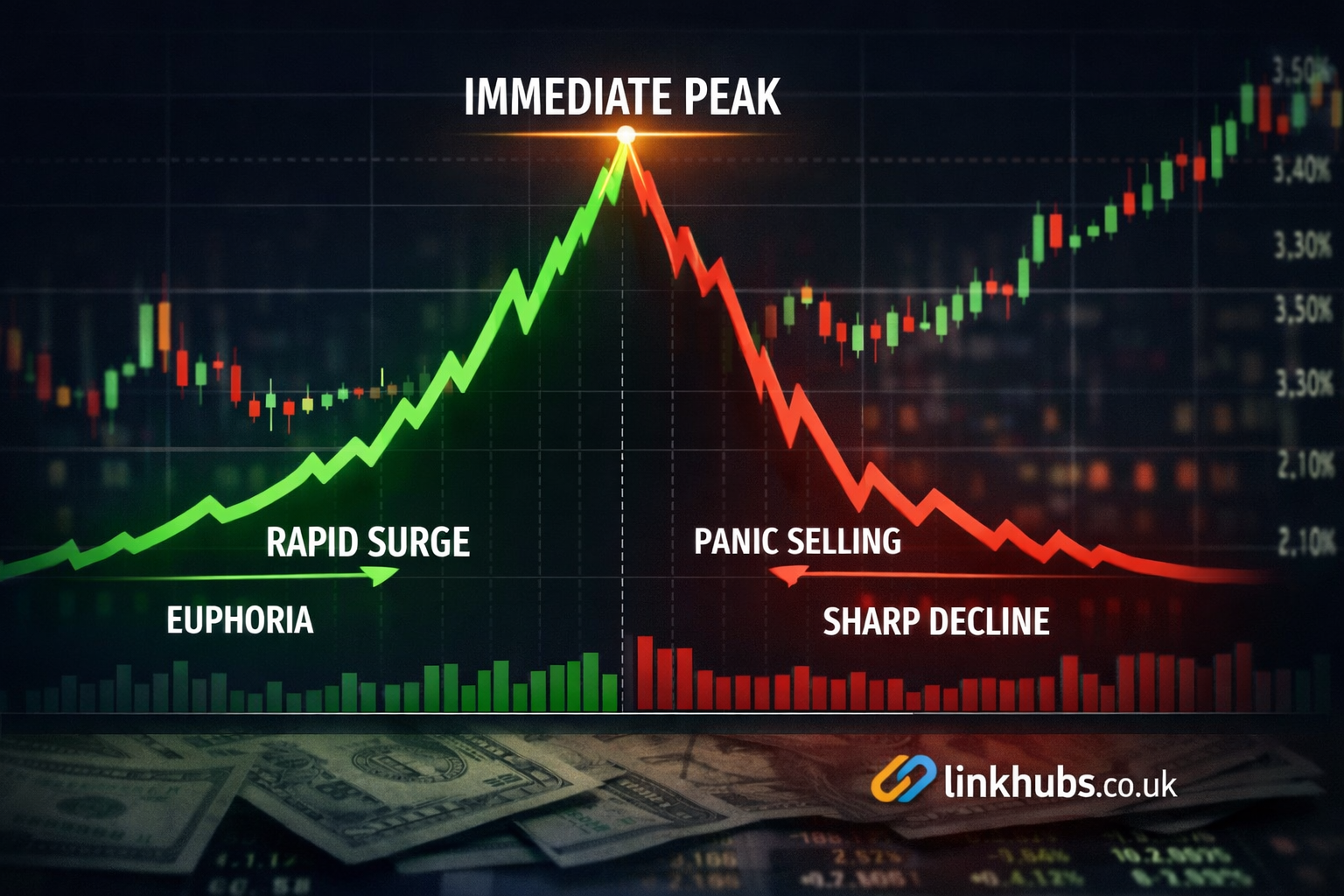
Immediate Peak: The Definitive Strategic Framework for Accelerated Performance and Growth
In high-performance environments—whether business, finance, technology, or personal productivity—the concept of immediatepeak has emerged as a defining benchmark for rapid optimization. It reflects the ability to reach a high-impact performance threshold in compressed timeframes without compromising sustainability or strategic direction.
Organizations and individuals increasingly prioritize immediate peak states to remain competitive in fast-moving markets. From accelerated learning curves to instant operational efficiency, the pursuit of rapid elevation has reshaped how success is measured, executed, and scaled.
Understanding the Immediate Peak Concept
Immediate peak refers to the rapid attainment of optimal performance within a condensed time horizon. Unlike gradual growth models, it emphasizes accelerated capability activation supported by systems, strategy, and precision execution.
This framework applies across industries—from startups scaling operations in months to professionals mastering complex competencies quickly. The unifying principle is velocity aligned with readiness, not reckless speed.
The Strategic Value of Immediate Peak Performance
Achieving an immediate peak state creates competitive insulation. Early dominance in capability, visibility, or output often establishes market authority before competitors can respond.
Beyond external positioning, it also drives internal momentum. Teams operating at accelerated performance levels develop confidence, cohesion, and clarity around execution priorities.
Psychological Drivers Behind Immediate Peak States
Cognitive priming plays a major role in immediate peak activation. When individuals believe rapid excellence is achievable, behavioral alignment follows naturally.
Motivation compounds when early results appear quickly. This reinforcement loop strengthens discipline, focus, and resilience under pressure.
Immediate Peak vs Gradual Optimization Models
Traditional growth models prioritize stability over speed. They emphasize incremental improvements, often sacrificing early opportunity windows.
Immediate peak frameworks invert this structure. They front-load investment, energy, and innovation to compress timelines while maintaining structural integrity.
Core Pillars That Enable Immediate Peak Outcomes
Three foundational pillars drive immediate peak attainment: strategic clarity, resource alignment, and execution velocity.
When these elements synchronize, performance acceleration becomes predictable rather than accidental.
Leadership’s Role in Triggering Immediate Peak
Leadership vision sets the ceiling for performance acceleration. Without decisive direction, teams default to slower operational rhythms.
Leaders who communicate urgency alongside structure enable teams to operate confidently within high-speed environments.
Technology as a Catalyst for Immediate Peak
Automation, AI, and analytics platforms dramatically reduce ramp-up timelines. They eliminate manual friction that traditionally delayed performance scaling.
Digital infrastructure allows organizations to simulate, test, and optimize outcomes before full deployment.
Skill Acquisition and Immediate Peak Learning Curves
Accelerated learning frameworks compress expertise development. Structured immersion replaces passive knowledge accumulation.
Deliberate practice, feedback loops, and real-world application create rapid competency elevation.
Operational Efficiency and Immediate Peak Execution
Operational bottlenecks often prevent peak activation. Streamlined workflows remove latency from decision and delivery cycles.
High-performance operations prioritize clarity, accountability, and measurable output benchmarks.
Market Timing and Immediate Peak Advantage
Speed to market often determines category leadership. Immediate peak readiness allows organizations to capitalize on emerging demand signals.
Early entrants shape consumer expectations, pricing structures, and innovation benchmarks.
Risk Dynamics Within Immediate Peak Strategies
Acceleration introduces calculated risk. Rapid scaling without infrastructure maturity can create instability.
However, structured risk modeling mitigates exposure while preserving speed advantages.
Immediate Peak in Startup Growth Models
Startups frequently rely on immediatepeak activation to secure funding, users, and market share quickly.
Compressed traction timelines signal viability to investors and stakeholders.
Corporate Transformation Through Immediate Peak
Legacy organizations use immediate peak frameworks to modernize operations and culture simultaneously.
Transformation accelerates when innovation and adoption cycles align.
Workforce Productivity and Immediate Peak Culture
High-output cultures normalize urgency without burnout when systems support performance.
Clarity of goals and access to tools sustain productivity spikes.
Financial Performance and Immediate Peak Indicators
Revenue acceleration, margin expansion, and cash-flow optimization often reflect immediatepeak activation.
Financial velocity becomes a measurable outcome of operational readiness.
Immediate Peak in Digital Marketing Strategy
Campaign performance can reach immediatepeak through data targeting, creative precision, and platform optimization.
Real-time analytics enable adaptive scaling mid-campaign.
Innovation Cycles and Immediate Peak Development
Rapid prototyping shortens product development timelines dramatically.
Immediatepeak innovation environments reward experimentation with structured feedback.
Competitive Positioning Through Immediate Peak
Market leaders often secure dominance through early performance peaks.
Competitors struggle to displace brands that establish early authority.
Immediate Peak and Customer Experience
Customer satisfaction spikes when service delivery exceeds expectations immediately.
First impressions often define long-term brand perception.
Scaling Infrastructure for Immediate Peak Sustainability
Acceleration without infrastructure leads to collapse. Scalable systems sustain peak output.
Cloud platforms, modular operations, and agile teams provide structural support.
Data Intelligence and Immediate Peak Insights
Data visibility enables predictive optimization. Organizations adjust strategies before inefficiencies compound.
Immediatepeak environments rely on real-time dashboards and performance metrics.
ImmediatePeak in Personal Performance
Individuals achieve immediatepeak through focus structuring, energy management, and cognitive discipline.
Peak productivity windows maximize output within limited timeframes.
Training Systems That Produce ImmediatePeak Results
Simulation training accelerates readiness. Realistic environments compress experiential learning.
Skill transfer becomes faster and more durable.
ImmediatePeak and Decision-Making Velocity
Rapid decision cycles define high-performance environments.
Clarity frameworks reduce hesitation and analysis paralysis.
Communication Structures Supporting ImmediatePeak
Information latency slows execution. Immediatepeak teams prioritize clarity and brevity.
Transparent communication reduces duplication and misalignment.
Cultural Alignment and ImmediatePeak Momentum
Shared urgency sustains acceleration. Culture determines whether peak states are temporary or repeatable.
Values and incentives must reinforce performance velocity.
ImmediatePeak Metrics That Matter
Key indicators include output speed, quality retention, and scalability readiness.
Measurement validates whether acceleration is sustainable.
Comparative Performance Framework
| Performance Dimension | ImmediatePeak Model | Gradual Model |
| Speed to Competency | Rapid | Moderate |
| Market Entry | Early | Delayed |
| Risk Exposure | Moderate | Lower |
| Innovation Rate | High | Incremental |
| Resource Intensity | Front-Loaded | Distributed |
| Competitive Advantage | Early Dominance | Slow Build |
ImmediatePeak Misconceptions
Many assume acceleration sacrifices quality. In reality, structured frameworks preserve standards.
Another misconception is that only startups can achieve immediatepeak states.
Sustainability After ImmediatePeak
Post-peak stabilization ensures longevity. Systems transition from sprint to endurance modes.
Maintenance strategies preserve gains.
ImmediatePeak in Remote Work Environments
Distributed teams can achieve rapid alignment through digital collaboration tools.
Virtual performance ecosystems remove geographic latency.
Industry Adoption Trends
Healthcare, fintech, SaaS, and logistics sectors increasingly adopt immediatepeak frameworks.
Speed has become a universal competitive currency.
Barriers to ImmediatePeak Activation
Legacy systems, cultural resistance, and unclear strategy delay peak attainment.
Transformation requires structural and psychological readiness.
ImmediatePeak Investment Considerations
Front-loaded investment often yields faster ROI realization.
Capital efficiency improves once peak performance stabilizes.
Strategic Partnerships and ImmediatePeak Expansion
Alliances accelerate capability access. Organizations bypass development timelines.
Partnership ecosystems enable faster scaling.
ImmediatePeak and Brand Authority
Visibility surges when performance peaks early.
Market perception often equates speed with leadership.
Regulatory and Compliance Considerations
Acceleration must align with governance frameworks.
Compliance automation reduces regulatory friction.
ImmediatePeak Case Scenario
A SaaS firm deploying AI onboarding reduced customer activation time by 70%.
This immediatepeak shift increased retention and lifetime value.
ImmediatePeak Quote Insight
“Speed is the new scale. Organizations that peak early define the market.” — Industry Growth Strategist
Future Outlook of ImmediatePeak Models
Acceleration frameworks will become standardized across industries.
AI orchestration will further compress performance timelines.
Conclusion
Immediatepeak is no longer an aspirational state—it is a strategic necessity. Organizations, professionals, and innovators who master rapid performance activation gain disproportionate advantages in visibility, revenue, and authority.
As markets accelerate, the ability to reach immediatepeak states—sustain them, and replicate them—will define the next generation of leaders.
FAQ
What does immediatepeak mean in performance strategy?
Immediatepeak describes reaching optimal performance rapidly through aligned systems, resources, and execution models.
Is immediatepeak sustainable long term?
Yes, when infrastructure and culture support the accelerated output established during the immediatepeak phase.
Which industries benefit most from immediatepeak models?
Technology, startups, finance, and digital services benefit significantly due to speed-driven competition.
Does immediatepeak increase operational risk?
Risk can rise, but structured planning and scalable systems mitigate instability during acceleration.
How can individuals achieve immediatepeak productivity?
Through focus management, deliberate practice, and optimized workflows that compress learning and execution cycles.

Leave a Reply